Topping up a thin attic
This suits attics where the old insulation is dry and clean but thin or uneven. We seal the gaps first, then add over what's there and build the edges back up to match the middle.
Hot upstairs in summer and cold rooms all winter? We seal the gaps, keep the vents clear and insulate, so the house holds its temperature.
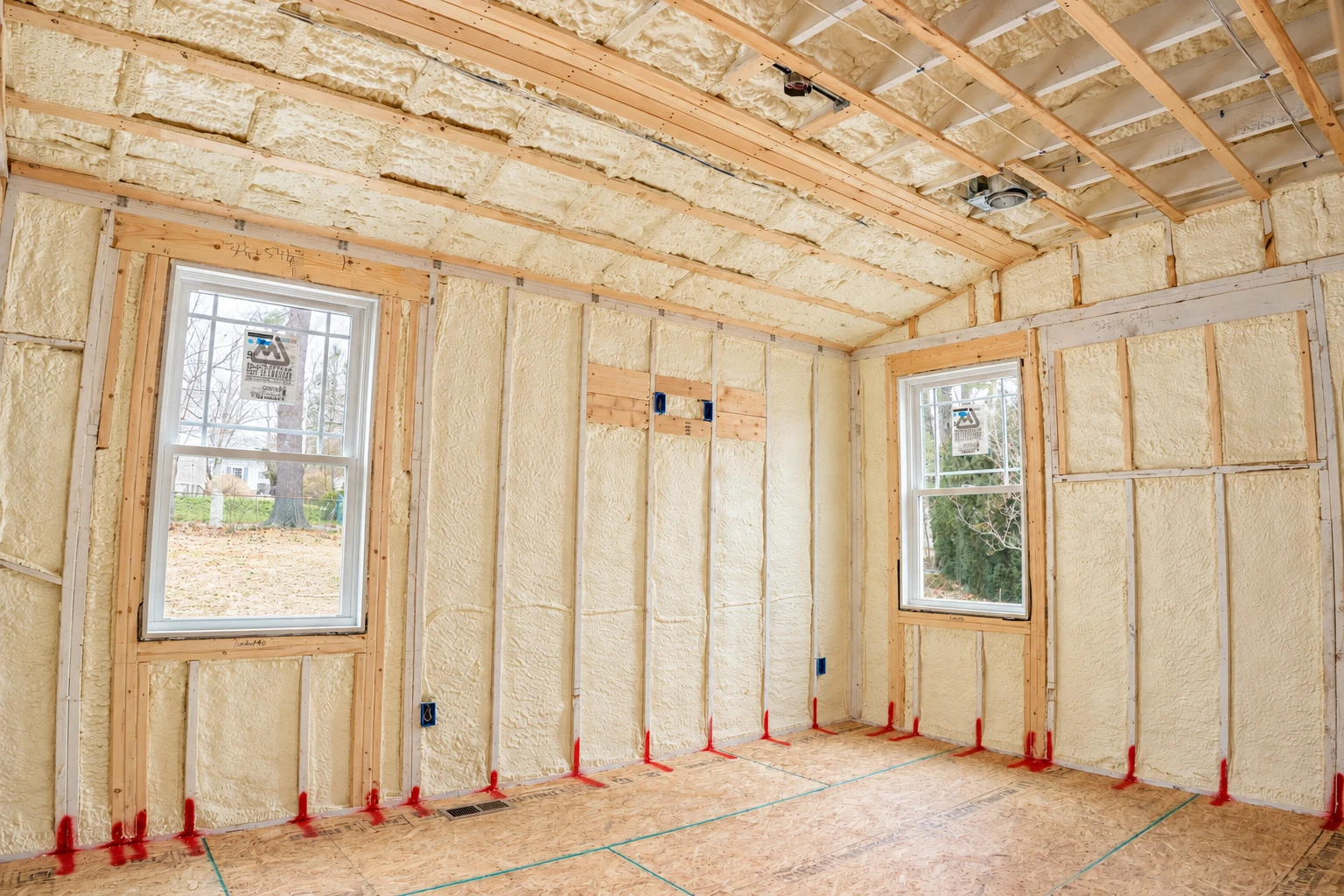
Attic insulation in West Lafayette means closing the gaps in your attic floor and adding insulation over it, so heat stays in the rooms below in winter and stays out of them in summer.
Most people call because the upstairs runs hot in July, a bedroom never warms up in January, or the power bill doesn't make sense for the size of the house. The price turns on how many inches are already up there and whether they're dry and clean, how many gaps need sealing, how big the attic is and how hard it is to get into, so I measure and look at all of that when I come out. The schedule depends mostly on whether old material has to come out first and whether your address needs a permit, and the estimate is where you get your own number.
I'm the one who comes out, climbs up into your attic and gives you the estimate, and I work alongside our crew on the install. The gaps I point out with a flashlight on the first visit are the ones I make sure get sealed.
We're best known for attics and air sealing, the part nobody sees once the insulation is down. I care about the order because insulation over open gaps or a wet roof is money thrown away, so we deal with what's underneath first.
I left an office job for work I could see at the end of the day, learned on another contractor's crew and started this business in 2023. If your attic already has enough and the gaps are the real problem, I'll tell you that.
We're fully licensed and insured, so you're not carrying the risk of someone working above your ceilings. Satisfaction guaranteed on every job. Call (765) 250-8264 or use the form on this page to set up a time for me to come look.
We reply within one business day to set a time, and I come out to look at your attic and give you the estimate, with no obligation. It helps to tell us whether the house is in New Chauncey or outside city limits, how the insulation up there looks, and where any recessed lights are.
The city's Building Department requires permits for any changes to existing buildings, and its permits page names structural changes and electrical work without mentioning attic insulation, so whether your job needs one isn't settled there. If you're not sure, the city asks you to contact its permit office and ask. We check which office covers your address, since city limits change who you deal with, and we handle the permit side with that office when your job calls for one. In the New Chauncey Historical District, plans go first to the Department of Development for review by the Historic Preservation Committee before the city reviews and issues the permit, and if you're outside city limits, you'd go to the City of Lafayette or the Tippecanoe County Building Commission instead.
Around West Lafayette we see plenty of older houses that are drafty at the top, attics that got topped up years ago with nobody sealing underneath, and rentals where a landlord wants the upstairs to stop running hot. We do the same work in Lafayette and Crawfordsville, along with other cities around here.
I can only give you a real number after I've been up in your attic, because the price comes from what's there. Sealing gaps and topping up a dry, clean layer usually costs less than clearing everything out and starting over. If the old layer is ruined, though, skipping the cleanout just saves money on a job that won't work.
On average, insulating attics, floors and crawl spaces and sealing air leaks can save up to 15% on heating and cooling costs. That's an average across all of those areas together, not a promise for your attic alone. A house with a lot of open gaps usually has more to gain than one that's already tight.
If it looks like loose pebbles, usually gray-brown or silver-gold, it may be vermiculite, and the EPA says work that would disturb it should go to a professional asbestos contractor, not you. You can look at it without touching it and compare it with the EPA's photos before I come out. If that's what's up there, the asbestos contractor's work gets planned first and ours comes after.
Unless a can light is rated IC, short for insulated ceiling, the guidance is to keep insulation off it and away from it. When I'm up there, I check each recessed light, and we keep insulation clear of any that aren't rated for contact.
The longest wait is usually the prep and paperwork, not the install. If your job needs a permit, the city typically completes its review within 10 business days after it has all the application materials. Old insulation that has to come out, or an asbestos contractor's work, also has to happen before we start.
For some households, yes. Indiana's Weatherization Program may install attic insulation and seal drafty areas for households with incomes up to 200% of the federal poverty level, and households eligible for the Energy Assistance Program also qualify if the home is safe to weatherize. If you think you might qualify, it's worth asking the program before you get estimates.