
D&T West Lafayette Spray Foam InsulationD&T West Lafayette Spray Foam InsulationRequest an estimate(765) 250-8264

Blown-in insulation in West Lafayette, IN - an attic covered to every edge

Hot upstairs in summer and cold floors in winter? We seal the gaps, then blow insulation out to every edge of your attic.

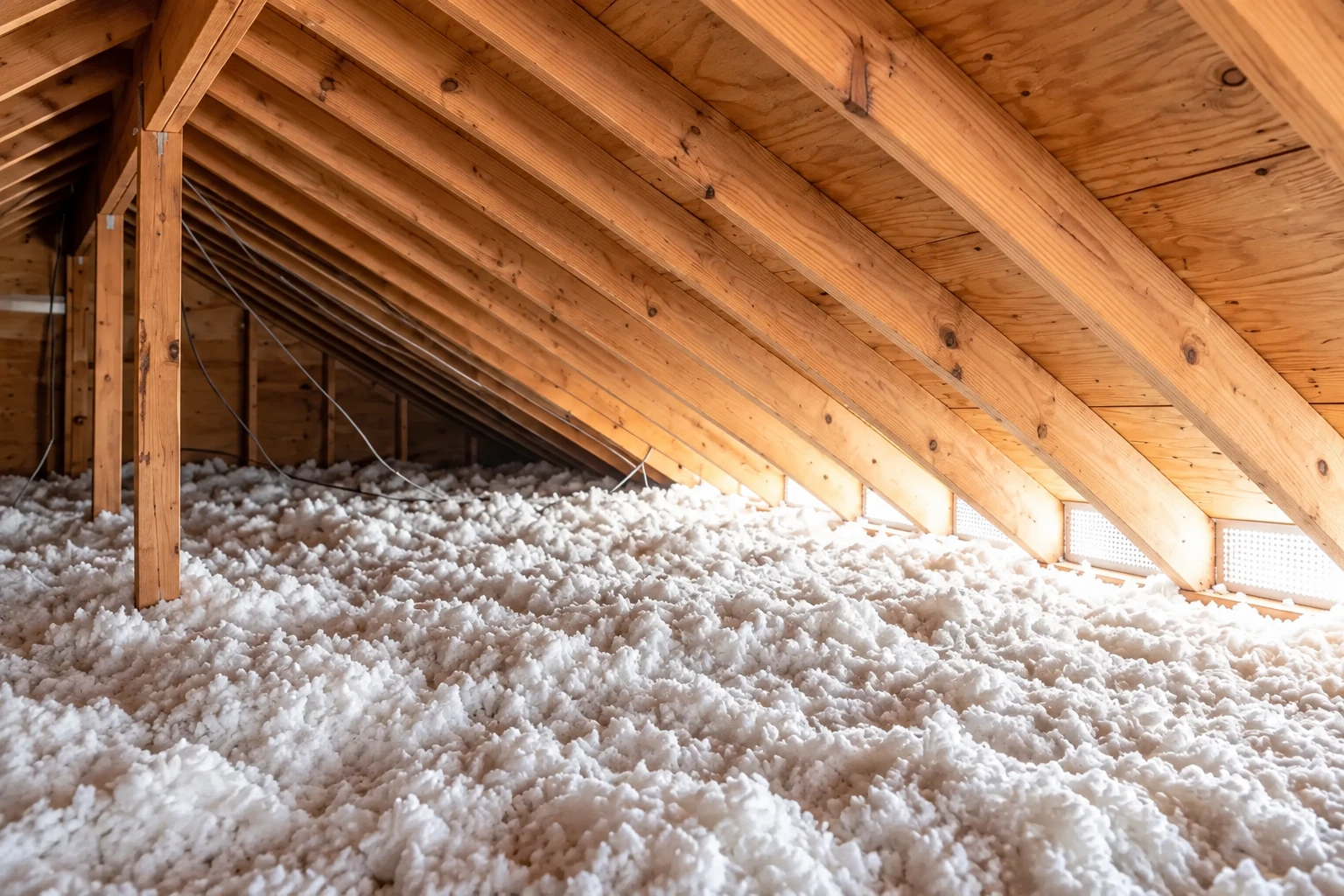
Loose white blown-in insulation blankets the floor beneath the sloped rafters of an unfinished attic.

Is blown-in insulation the right fix for your attic?

Blown-in insulation is loose cellulose or fiberglass blown through a hose onto your attic floor, or into closed walls through small holes. For most West Lafayette houses with a thin or uneven attic, it's the most practical way to get full, even coverage.

Most calls start with a hot upstairs, cold floors or a power bill that doesn't add up, and the attic is usually where I find the reason. The price moves with the size of the attic, how many inches are already up there, how many gaps need closing first, which is the attic air sealing part of the job, and whether old material has to come out before anything new goes in. The schedule turns on those same things, plus a permit when your job calls for one, and I'll check which office covers your address so you know where that stands. I'll give you your own number after I've seen the attic.

How we do blown-in insulation, in the right order

I start by looking at what's already up there, because new material over insulation that's been soaked or is full of droppings just keeps the problem around. Then we close the gaps around can lights, pipes, wires and the attic hatch, so the insulation isn't fighting a draft. We set baffles, short channels at the eaves, so the fill stays put and the vents keep moving air. After that we blow the insulation out to the edges over the outside walls and bring it to an even depth across the whole floor, because blown-in only works when it reaches every corner, and the edges are where it usually ends up thin. We clean up before we leave.

If the old insulation is wet, full of droppings or packed flat, it should come out first through our insulation removal work, since piling new material on a bad layer doesn't fix anything. And if the attic is only part of it, with cold walls or a drafty room over the garage, our home insulation visit looks at the whole house so you're not paying to fix one spot while the draft comes from another.

Sealed attic floor with loose fill on top

This suits most vented attics, because sealing the gaps and topping up with loose fill gets you most of the benefit for less money. Foam costs more and seals air while it insulates, so I'll point you toward it when your ductwork runs through the attic.

Blowing insulation into closed walls

This suits older houses whose outside walls are empty or close to it, when you'd rather not tear open plaster or drywall. We drill small holes near the top of each wall space, fill it and plug the holes, so the mess inside your house stays small.

Why West Lafayette homeowners call D&T for blown-in insulation

I do the estimate and work the install

I'm the one who climbs into your attic, looks at what's there and gives you the estimate. I also work alongside our crew on the install, so the person who saw the problem is standing there when we fix it.

Gaps sealed before any insulation goes in

I care about the order of the work, because insulation over open gaps or a wet roof is money thrown away. If I find a leak or a soaked layer, we deal with that first and I tell you plainly what it adds to the job.

Three years in, still giving straight answers

I started this business in 2023 after learning insulation on another contractor's crew. If your attic already has enough and the real problem is somewhere else, I'll tell you that rather than sell you a job you don't need.

Licensed, insured and satisfaction guaranteed

We're fully licensed and insured. Satisfaction guaranteed on every job, and if something about the finished attic doesn't sit right with you, tell me. When you're ready, call (765) 250-8264 or use the form below and I'll set a time to come look.

Get an on-site look at your attic and a price for blown-in insulation

We reply within one business day, and the estimate is free, on site and comes with no obligation. Once you send the form, we'll set a time for me to come out, look at your attic and give you a price. It helps to know your home's age and where the attic hatch is, and to mention any old wiring or gray-brown, pebbly insulation you've spotted.

Location
West Lafayette, IN 47906
Hours
Mon–Fri: 7 AM–10 PM, Sat–Sun: 6 AM–11 PM

Blown-in insulation permits and houses in West Lafayette

Inside city limits, the West Lafayette Building Department issues permits for residential work and requires a building permit for any alterations, repairs or changes to an existing building, so I check with them whether your insulation job needs one. If your address sits outside city limits, the city sends you to the City of Lafayette or the Tippecanoe County Building Commission instead, and I sort out which one covers you before we schedule. When a permit is needed, we handle that side with the right office, and the city says its review is typically done within 10 business days once it has everything it asked for.

We're based in West Lafayette and do the same work in the cities around it, including Lafayette, Crawfordsville, Frankfort and Monticello. Around here I see a lot of drafty older houses where the insulation has settled thin over the years, rooms over the garage that never warm up, and newer attics filled deep in the middle and left short along the edges.

Questions homeowners ask about blown-in insulation

Is blown-in insulation better than batts for an attic?

For most attic floors, yes. An older federal fact sheet found that blowing loose fill usually costs less than installing batts and covers the floor better, though install costs vary. Batts leave seams around joists and wires, and loose fill settles into those spaces, which is why we use it on attic floors.

How much does attic insulation cost in West Lafayette, IN?

Attic insulation across the US usually costs about $1,700 to $2,500 per job, and that's a national figure, not our price. Your number depends on attic size, how much is already up there and how much sealing or removal comes first. If money is tight, Indiana's Weatherization Assistance Program can serve households with incomes up to 200% of the federal poverty level, or those eligible for the Energy Assistance Program, whose homes are safe to weatherize, and its work may include attic and wall insulation.

What is the best way to handle vermiculite insulation in my attic?

Leave it alone and treat it as if it may contain asbestos, which is what the EPA advises, because disturbing it can put fibers in the air. If you decide to have it taken out, that's work for a trained, accredited asbestos abatement contractor, separate from whoever assessed it. If I find it during an estimate, we stop there and plan around it with you before anything else happens.

How do I plan blown-in insulation for an older house with old wiring?

Settle the wiring first, because one building guide notes the electrical code bars insulation from going on or around knob-and-tube wiring, the old wires strung on porcelain knobs. If your house was built before 1980 and the job means opening walls, that guide also says to plan for lead safety rules, depending on how much the walls get disturbed. I look for both during the estimate, so you know what has to happen before any insulation goes in.

What should a quote for blown-in attic insulation include?

It should include sealing the openings in the attic floor with sealant, spray foam or blocking before any insulation goes in, since federal guidance for existing vented attics puts that step first. Prep should also cover metal blocking and collars around hot flues, and covers over recessed can lights that aren't rated for contact with insulation, so it's worth asking which of your lights need one. If a quote jumps straight to inches, ask what happens to the gaps.

Call (765) 250-8264