
Foam on the trouble spots
This suits a house with one cold room or cold floors. We foam the rim joists, the floor over the garage or a knee wall, where the air actually gets in, and leave the rest of the house alone.
Drafty rooms, a hot upstairs or a power bill that makes no sense? We seal the gaps and insulate in one pass.
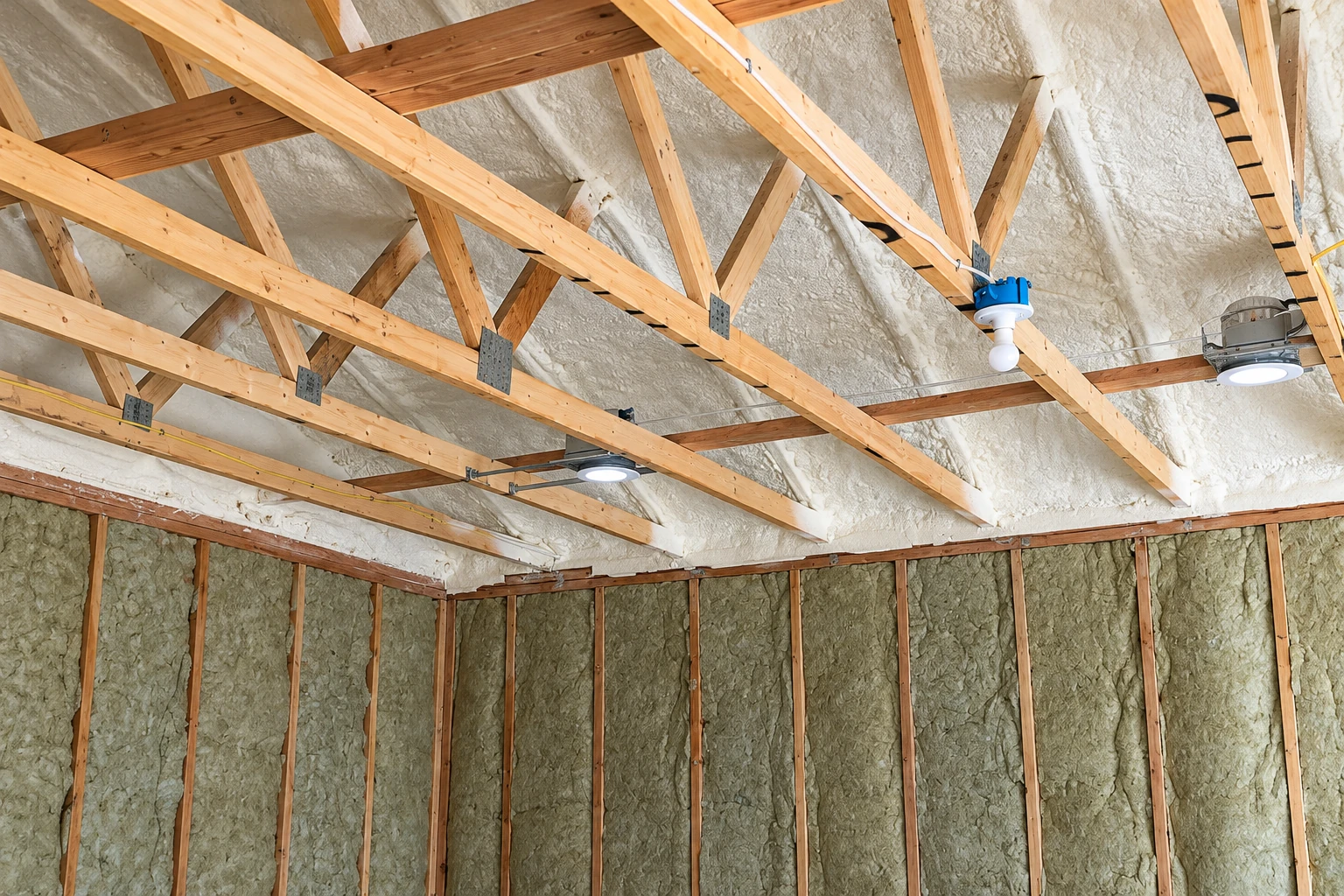
Spray foam insulation is foam we spray onto the underside of the roof, the rim joists or the walls of West Lafayette homes, where it expands into the gaps so the same coat insulates and stops air leaks.
At D&T West Lafayette Spray Foam Insulation, most calls start with a freezing room over the garage, an upstairs that bakes in July or an older house that's drafty no matter where the thermostat sits. Foam makes the most sense where air pours through spots loose fill can't close, like rim joists, knee walls or an attic with ductwork running through it. The price mostly comes down to the square footage, which foam we use and how thick, how hard the space is to reach and whether old or damaged material has to come out first. The schedule turns on how long you'll need to be out of the house after we spray, and on fitting that around your week. I come out, look at the space and give you the estimate, so the number you get is for your house and not a guess.
I'm the one who comes out to look at your attic, crawl space or cold room and give you the estimate. I also work alongside our crew on the install, so the person who explained the plan to you is there making sure it gets done that way.
I learned insulation on another contractor's crew, then started this business in 2023. Attics and air sealing are what we're best known for, which is why we look at the gaps and the old material in your house before we ever talk about foam.
We're fully licensed and insured. That matters more with spray foam than with most insulation, because it's chemical work done inside the house your family lives in, and you should know who's responsible for the job before anyone starts spraying.
Satisfaction guaranteed on every job. Part of that is telling you when foam isn't worth the money for your house, because I'd rather lose the sale than sell you the wrong fix. Call (765) 250-8264 or use the form to set up a visit.
We reply within one business day, and I'll come out to look at the space and give you a free estimate with no obligation. It helps if you can tell us the rough square footage, which areas you want done and whether the house is in New Chauncey or outside city limits.
Inside city limits, the West Lafayette Building Department issues residential permits, and the city requires one for alterations, repairs or changes to existing buildings. Its building permits page lists new construction, structural changes and electrical work and asks owners who aren't sure about their project to contact its office, so we check how your job is treated before we set a spray date, and we handle the permit side with them when your job calls for one. If your house is in the New Chauncey historic district and the job needs a permit, the plans go to the city's Historic Preservation Committee for review before the Building Department issues anything, so that review goes on the calendar ahead of the spray date. Outside city limits, the city points owners to the City of Lafayette at 765.807.1050 or the Tippecanoe County Building Commission at 765.423.9225, and because city limits change who you deal with, we check which office covers your address first.
Around West Lafayette we see a lot of older houses with rooms tucked under the roof, drafty knee walls and attics with ductwork running through them, plus rentals where the landlord wants the cold-room complaints to stop. Those are the houses where foam tends to earn its cost. We're based here and do the same work in Lafayette and Crawfordsville, along with Frankfort, Monticello and other cities around them.
Spray foam insulation in the Lafayette area usually costs about $2 to $5 per square foot. That's the going rate around here, not a quote, and your own number comes from the estimate once I've seen the space.
Go with closed-cell if you want the most insulation in the least depth, and open-cell if quieter rooms matter more to you. Closed-cell, the dense foam that blocks moisture, is about twice as energy efficient per inch as open-cell and costs more, while open-cell is a much better sound barrier. Those are general comparisons, so I'll tell you which one fits the spot in your house after I've looked at it.
Plan to leave before we start spraying and stay out for a while afterward, and some makers recommend 24 hours for professional high-pressure foam. The re-entry time, when it's safe to come back in, varies by product, so the time we give you before booking comes from the maker of the foam we're using.
Kids should be out of the house while we spray and until the re-entry time has passed. The EPA says vapors, airborne spray and dust from spray foam can cause asthma, lung damage and skin and eye irritation during and after installation, and it suggests thinking about children in particular when you set a return time, since they crawl and sit on floors where dust may settle. If a child at home has asthma, tell me before we book, because the EPA calls those kids especially vulnerable.
Usually it's the conditions in the house on spray day. Foam needs the right air and surface temperature, humidity and dry surfaces to go on properly, so we sometimes have to adjust the indoor conditions or move the date. A permit review, and in New Chauncey the historic review mentioned above, can also set the calendar.