D&T West Lafayette Spray Foam InsulationD&T West Lafayette Spray Foam InsulationRequest an estimate(765) 250-8264

Basement insulation in West Lafayette IN - walls that stay warm and dry

Cold floors and a damp smell downstairs? We deal with any leak first, then insulate the walls so the basement stays warm and dry.

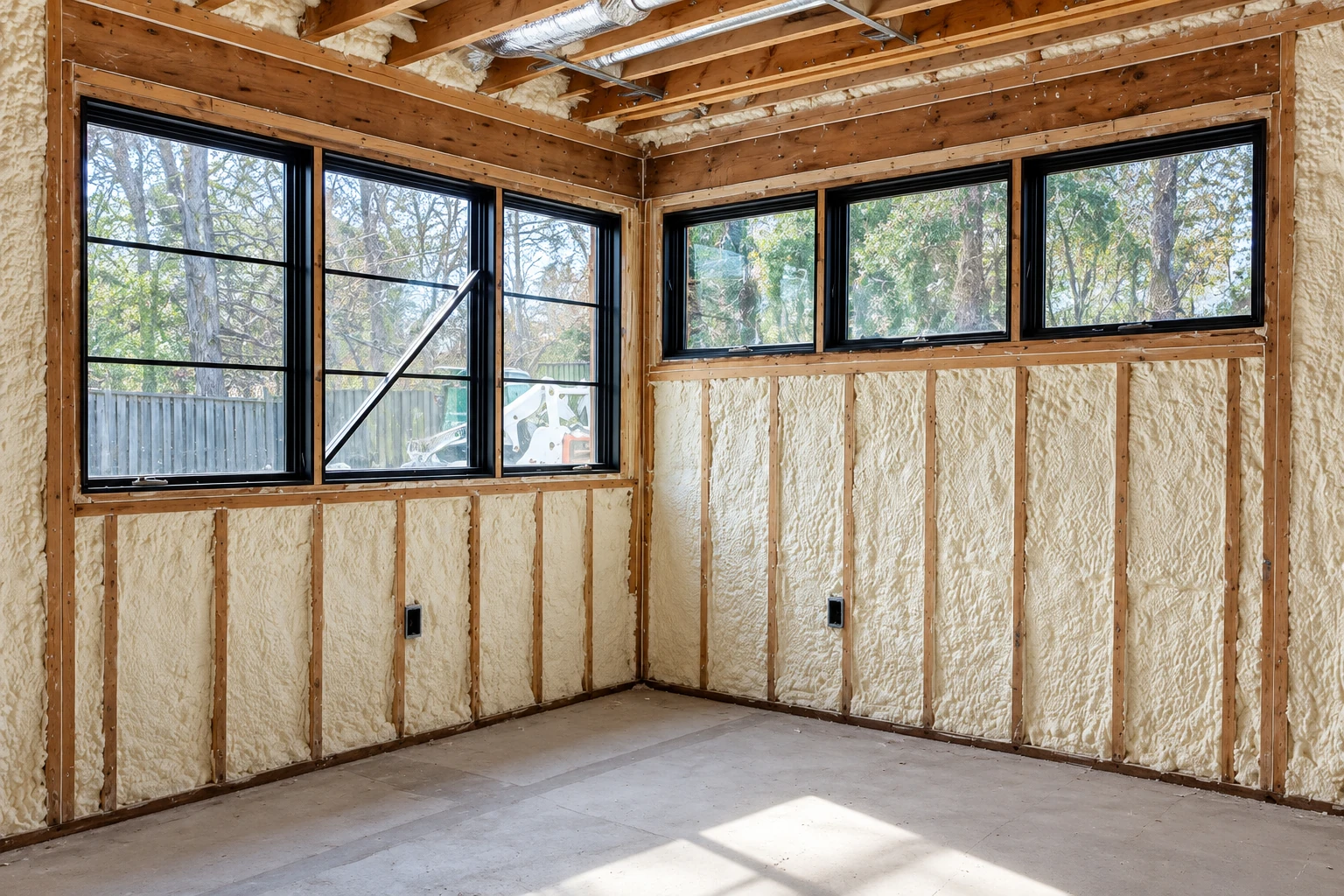
White spray foam insulation fills the wall cavities of an unfinished room with large black-framed windows.

How do you insulate a basement so the walls stay dry?

Basement insulation in West Lafayette goes on the inside of your foundation walls. Done right, it keeps the room warmer, cuts drafts and keeps damp from collecting behind the finished wall.

Most basement calls start with cold floors upstairs, a damp smell downstairs, or plans to finish the space without the new walls going moldy. What moves the price is the size of the basement, the material your walls need and how much work sits in tight spots around the furnace, water heater and pipes. The schedule mostly turns on two things. One is whether water is coming in, since we deal with that before any insulation goes up, and the other is whether your job needs a permit. I come out, look at the walls and give you the estimate, so you'll have your own number before anything starts.

How we do basement insulation, moisture first

In a basement, moisture comes before warmth. Every job starts with me walking the walls with a flashlight, looking for wet spots, white crust on the concrete and cracks that let water in. If water is coming through the wall, we deal with that first, because insulation over a wet wall just holds the damp against it. Then we clear the walls and seal the gaps at the rim joist, the band of framing that sits on top of the foundation, and around pipes and wires, so the insulation isn't fighting a draft. Last, we put up a material that won't soak up the damp sitting against the concrete, and we finish it the way your plans for the room call for.

When foam is the right call, the choice is usually between closed-cell foam insulation, the dense, rigid kind, and open-cell foam insulation, the lighter, softer kind. I'll tell you which one your walls need, and why, before anything gets sprayed. The questions below cover how that choice gets made.

Spray foam on bare concrete

This suits a basement you plan to finish, or one with uneven block walls and lots of pipes and corners, because the foam fills every dip and seals air as it goes on. Foam has to be covered with ignition-barrier paint, a fire-slowing coating, or with drywall, so that layer is part of the job.

Foam board behind a framed wall

This suits straight, dry walls when you're framing and hanging drywall anyway, because rigid board doesn't soak up water and the studs go right in front of it. We seal the seams so air can't slip behind the board, and this usually costs less than spraying.

Why West Lafayette homeowners call D&T West Lafayette Spray Foam Insulation for basement insulation

The person who prices it helps install it

I'm the one who comes out, looks at your walls and gives you the estimate, and I'm in the basement working alongside our crew on install day. If your wall needs a water fix before insulation is worth the money, I'll tell you that straight.

In business since 2023, trained on a crew

We started this business in 2023, after I learned insulation working on another contractor's crew. What stuck with me is order. Water gets handled first, gaps get sealed next and insulation goes in last, because insulation over a leak or an open gap is money thrown away.

Fully licensed and insured

We're fully licensed and insured, so the risk of having a crew working in your basement isn't left on you. When you're ready, call (765) 250-8264 or fill out the form on this page, and we'll set up a time for me to come take a look.

Get an on-site look at your basement walls

Send the form and we'll reply within one business day to set a time. I'll come out, look at the walls and any leaks or damp spots, and give you a free estimate with no obligation. It helps to have a rough size of the basement handy and to know whether your house is inside West Lafayette city limits.

Location
West Lafayette, IN 47906
Hours
Mon–Fri: 7 AM–10 PM, Sat–Sun: 6 AM–11 PM

Basement insulation permits and planning in West Lafayette

The West Lafayette Building Department issues building permits for alterations, repairs and changes to existing buildings inside city limits. The city's permit FAQ adds that a remodel needs a permit for any structural work, while cosmetic work needs none. Neither statement names basement insulation, so ask the Building Department about your own project. If your house is outside city limits, the city points you to the City of Lafayette or the Tippecanoe County Building Commission instead. We check which office covers your address and handle the permit side with them when your job calls for one, here and in the cities around us like Lafayette and Crawfordsville.

One more thing is worth planning before the walls get closed in. The state health department estimates nearly 1 out of every 3 Indiana homes has radon levels above 4.0 picocuries per liter, and it says testing is inexpensive, easy and the only way to be sure. Around here we mostly see older poured and block foundations with a damp corner or two and rim joists nobody ever sealed, so the leak check and the air sealing are steps we plan for on most jobs.

Basement insulation questions we hear most

What is the best way to insulate basement walls in West Lafayette?

Closed-cell spray foam handles moisture best of the insulations that go inside a basement. Fiberglass or cellulose pressed against the wall can soak up a lot of moisture and stay damp. Open-cell foam seals air well too, but it has to go on thicker before it holds back vapor, so I pick the material by how it handles damp against your wall.

How much does it cost to insulate a basement?

Insulating a basement usually runs about $1,000 to $5,000 per job across the US. That's the market's range, not our price. Where yours lands turns on the size and material points above, and you get your own figure at the estimate.

Should I insulate my basement walls or the basement ceiling?

Insulate the walls if you plan to use the basement as a room. Building research guidance says to insulate a basement ceiling only in a dry climate, and only when the basement won't be living space.

How do I keep moisture out of my basement wall insulation?

Fix any water coming through the wall, steer water away from the foundation and seal the gaps before insulation goes in, which is the order federal installer guidance gives. Plastic sheeting or foil on the room side of fiberglass can trap moisture inside the wall. That guidance names kraft-faced fiberglass batts, the kind with a paper backing, or latex paint on the drywall as the choices to use instead.

What should I do before the insulation crew comes to my basement?

Move stored boxes and furniture away from the walls, then sweep or vacuum so the crew can get to the work. Show us any leaks or damp spots, because those get handled before the insulation goes up.

Call (765) 250-8264