Liner over the ground
This suits a vented crawl space with no ducts or furnace down there, once any water problem is handled. It's the smaller job of the two, and for a lot of houses it's all they need.
Musty smell, damp dirt or torn plastic under the house? We find the water first, then cover the ground with plastic that holds up.
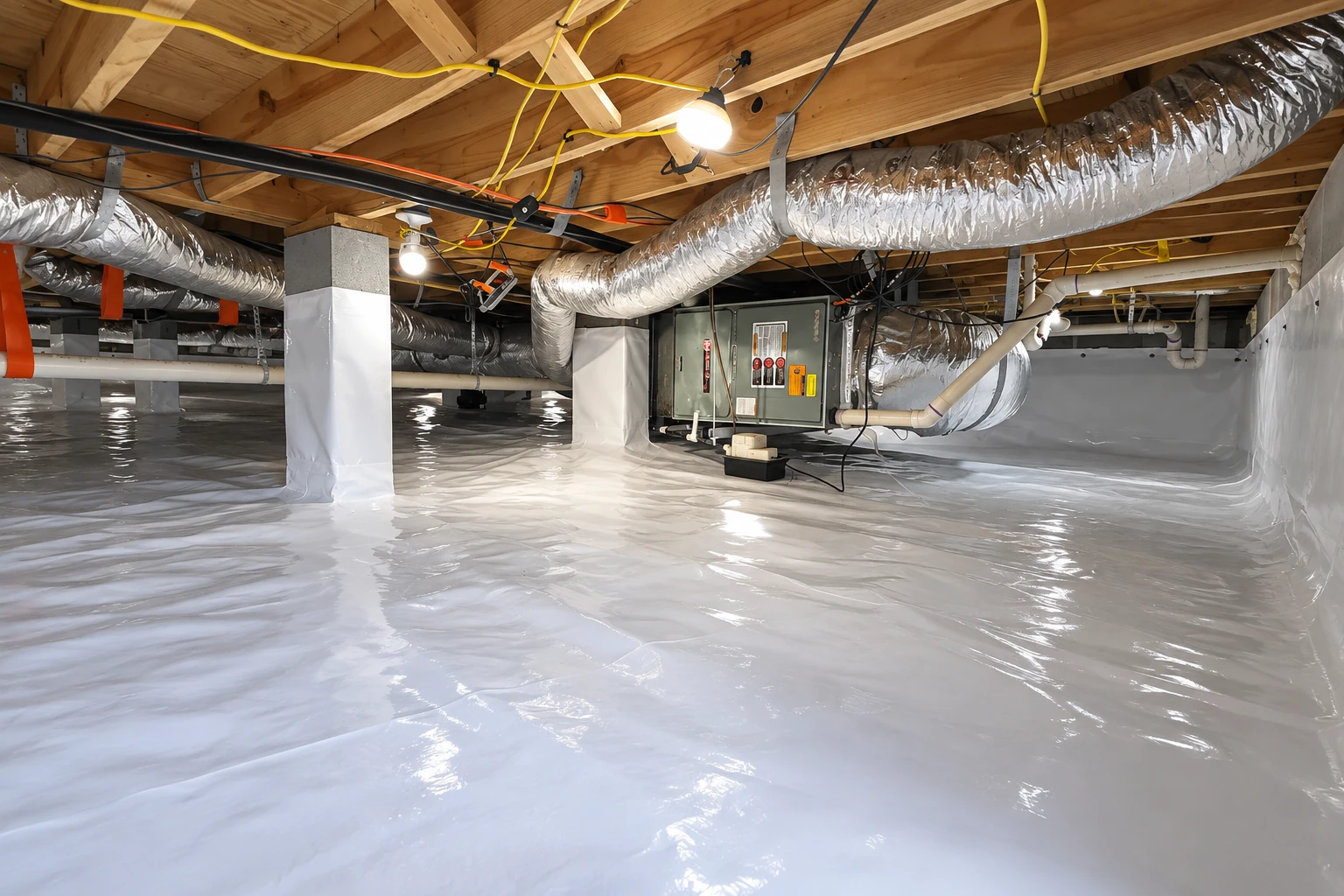
A crawl space vapor barrier is a sheet of heavy plastic laid over the bare dirt under your house, and in West Lafayette we put one in so moisture coming up out of the ground doesn't soak the crawl space and everything in it.
Most people call when the floors over the crawl space feel cold, the house smells musty, or someone came back up from the furnace talking about standing water or plastic torn to shreds. The price mostly turns on how big the space is, how much old junk has to come out, whether water has to be dealt with first and whether you want a liner or a fully sealed crawl space. The schedule turns on that same water question, since any grading or drainage fix outside has to come first. You get the figure for your house at the estimate, once we've been down there, and if cold floors are the main complaint, crawl space insulation may belong in the same conversation.
I come out to look at the job and give you the estimate myself, flashlight in hand, so the person pricing your crawl space has actually seen it. I also work alongside our crew on the install, so what we talked about is what gets done.
We've been in business since 2023. Before that I learned insulation on another contractor's crew, after years at an office job, because I wanted work I could see when the day was done. Under a house, that's plastic laid flat, sealed and covering the whole floor.
We're fully licensed and insured. A crawl space puts our crew in a tight spot next to your ducts, wiring and water lines, and you shouldn't be the one carrying the risk while we're working down there.
If a liner won't help until the water's fixed, or your house doesn't need a fully sealed crawl space, I'll tell you before you spend a dime. Satisfaction guaranteed on every job. Call (765) 250-8264 or use the form to set up a look.
Send the form and we'll reply within one business day to set a time for me to come out and look under the house. The estimate is free, on site and comes with no obligation. It helps to tell us whether your crawl space has vents, what equipment sits down there, any standing water you've seen and any radon test result you have.
Inside city limits, the West Lafayette Building Department issues residential permits and requires one for any alterations, repairs or changes to an existing building. The city's permits page names new construction, structural changes and electrical work, and asks anyone unsure to contact the office, so whether your crawl space job needs a permit is their call, not something we'd guess at. We check which office covers your address, since city limits change who you deal with, and handle the permit side with that office when your job calls for one. The city also wants a contractor's bonds on file before any permitted work, and holds the permit until they are.
Outside West Lafayette city limits, owners go to the City of Lafayette at 765.807.1050 or the Tippecanoe County Building Commission at 765.423.9225. We're based in West Lafayette and do the same work across the cities around it, including Lafayette and Crawfordsville. Under houses around here we often find a bare dirt floor, or an old sheet of thin plastic that's been torn up by whoever crawled back to the furnace.
Yes. Federal building guidance says the ground cover should go in whether your crawl space is vented or sealed, and it also helps keep soil gases out of the house. Vents move outside air through, but they don't stop moisture coming up out of the dirt.
In vented crawl spaces, most of the moisture comes from water running in, usually from poor grading, missing drainage around the foundation or irrigation soaking the ground near the house. That's why the fix for those gets planned alongside the liner, not after it. If we find one of them, we'll show you where it is before we price the plastic.
A liner covers the ground, while a full sealed conversion also closes the vents, insulates the walls and seals the plastic to them so humid outside air stays out. The crawl space then becomes part of the heated and cooled house, so ducts and equipment down there last longer and run more efficiently. Federal guidance calls for a combustion safety test after a conversion if a natural-draft furnace or water heater sits down there, to check that exhaust isn't flowing back the wrong way. Before sealing, you can ask for the list of water, moisture or pest damage found during the inspection.
It's a good idea. The EPA advises testing every home for radon and fixing it if the level is 4 picocuries per liter or higher, and having a result before the work helps you decide whether radon fixes belong in the same project.
There's no honest number until we've seen the space, because the price comes from what's under your house. A liner alone costs less than a fully sealed crawl space, and the bill goes up with the size of the space, how much old plastic and junk has to come out, and how much tougher material goes along the paths to your equipment. Water problems that have to be fixed first are usually the biggest swing.
Clear out whatever you store down there, since the plastic has to cover the whole ground to do its job. We pull out old debris and torn plastic ourselves. If a grading or drainage fix is on the list, that gets planned first, and a sealed conversion with natural-draft equipment needs time afterward for the safety test mentioned above.