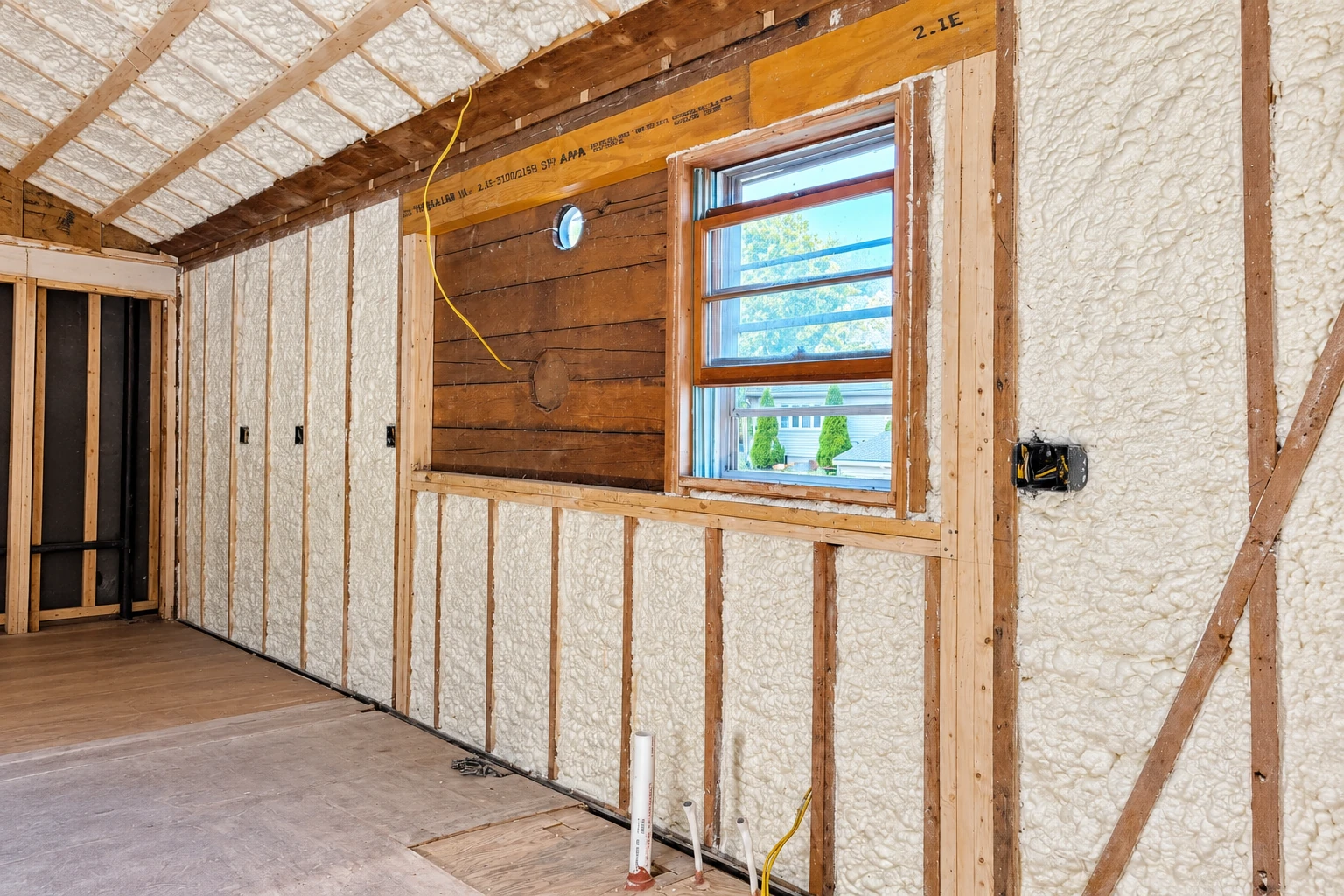
Most houses need a little help in a few places more than a lot in one, so I start by checking the attic, the floors, the crawl space and the rim joists, the framing that sits on top of the foundation, and then tell you where your money does the most. If you've had ice dams, tell me, because that says a lot about where air is leaking. Anything that's soaked or full of droppings comes out before new material goes in, since covering it just keeps the problem. Then we do the air sealing, closing gaps around can lights, pipes, wires and the attic hatch, so the insulation isn't fighting a draft. We keep the vents at the eaves clear so the attic can still breathe, get full depth out to the edges where it's usually thinnest, and clean up before we leave.
Some jobs start with insulation removal, when the old material is wet, dirty or in the way of sealing the gaps underneath it. If your floors are cold, the trouble is often below you, and crawl space insulation may do more for that room than anything we add to the attic.
Air sealing with blown-in on top
For most attics, sealing the gaps and then topping up with blown-in insulation, loose fill blown through a hose, gives you the most for the money. It settles around wires and odd framing without tearing anything up, and it's the option I recommend most often.
Spray foam where ducts or rim joists leak
Foam costs more, but it seals air while it insulates, so it earns its price where ductwork runs through the attic or along rim joists that pull cold air into the basement. Closed-cell foam, a dense foam that also blocks moisture, suits spots that stay damp.
Batts for open floors and framing
Where the framing is open and easy to reach, like floors over a crawl space or an unfinished room over the garage, batts cut to fit do the job well. They have to be fitted tight around pipes and wires, because every gap left in a batt lets heat walk right past it.